

What is Orthodontics and What Does It Cover?
Content Guide
Who Is an Orthodontist Does Orthodontics Involve Surgery Why Do Orthodontic Problems Occur How Necessary Is Orthodontic Treatment What Are the Types of Orthodontic Treatments How Is Orthodontic Treatment Performed Orthodontic Treatment Methods Clear Aligner (Wireless) Orthodontics Orthodontic Treatment Process Braces TreatmentOrthodontics is derived from the ancient Greek words “orthos” (straight, correct) and “odons” (tooth). While it literally means “straight teeth,” it also addresses facial and jaw development disorders.
The goal of orthodontic treatment is proper jaw alignment. This improves chewing, biting, and speech. Orthodontics treats spacing, crowding, misalignment of teeth, and jaw positioning issues including missing teeth, open/under/overbites, and gum diseases.
The orthodontics department of dental clinics focuses on teeth and jaw treatments. It deals with issues such as gaps between teeth, jaw closure problems, and braces treatment.
Correcting orthodontic problems also boosts self-confidence by improving dental aesthetics and overall oral health.
Who Is an Orthodontist
An orthodontist is a dental specialist who examines, diagnoses, and treats irregularities in teeth, jaws, and the oral structure. These professionals undergo additional specialized training beyond general dentistry.
In short, a dentist who specializes in orthodontics is called an orthodontist. A general dentist may not treat orthodontic issues unless they hold the specialization.
For this reason, seeing an orthodontist is crucial and valuable for problems related to this field. Receiving treatment from a non-specialist dentist may be risky.
Does Orthodontics Involve Surgery
In adult patients who have completed growth and development, jaw misalignment may not be treatable with orthodontics alone. In such cases, orthodontics must be combined with surgery.
Orthodontic treatments may involve surgery in cases such as protruding or receding jaws, jaw narrowness, angular jaw positioning, and front teeth misalignment.
That’s why an orthodontic exam starting from age 6 is important. Early preventive treatment may eliminate the need for surgery in adulthood.
Why Do Orthodontic Problems Occur
Orthodontic issues can be congenital or develop later due to accidents or infections.
Genetic factors, prolonged pacifier/bottle use, habits like thumb sucking or nail biting, mouth breathing, incorrect swallowing patterns, and early loss of baby teeth can all cause orthodontic problems.
How Necessary Is Orthodontic Treatment
Orthodontic treatment aims not only to align teeth but also to prevent future jaw joint problems, support dental tissue health, improve chewing efficiency, and correct some speech disorders.
Even if there are no current issues, orthodontics can prevent future complications. Braces are the most well-known form, especially recommended at a young age.
Without treatment, these problems may lead to tooth decay and more serious issues. Different approaches are taken based on severity.
Treatment methods may include removable appliances, functional appliances, or fixed appliances depending on the case.
The patient should be examined in a clinic, and X-rays evaluated by a specialist for accurate planning.
What Are the Types of Orthodontic Treatments
Orthodontic treatments are generally divided into removable appliances and fixed braces. Braces are further categorized into several types.
Removable appliances are often used in early treatment for children. Fixed braces involve brackets and wires attached to teeth to align them.
Lingual orthodontics refers to braces applied behind the teeth. Clear aligners are another modern option for correcting misaligned teeth.
How Is Orthodontic Treatment Performed
It is performed by an orthodontist who is a graduate of dentistry. Various orthodontic methods are used to align the teeth and adjust jaw relations.
The appliances apply mild forces to correct positioning. The treatment approach depends on the patient’s condition.
Orthodontic Treatment Methods
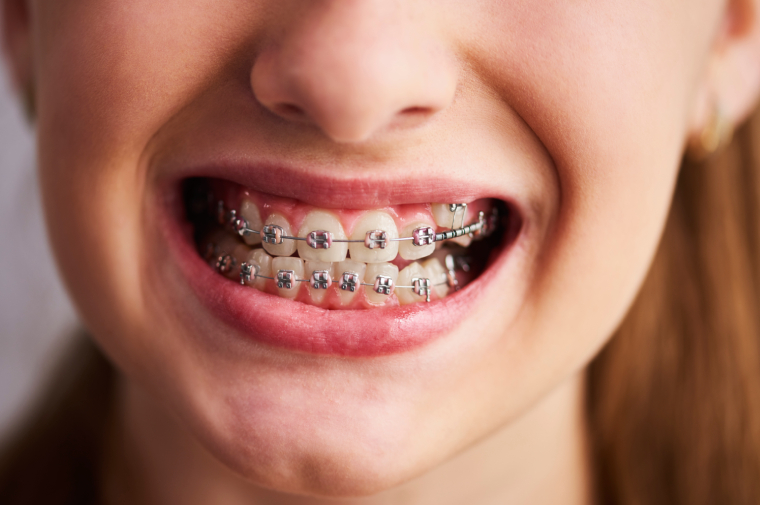
Fixed orthodontic appliances such as metal braces are most commonly used. They exert continuous pressure to move teeth over time.
Clear brackets, made of tooth-colored or transparent material, work similarly but are more aesthetic and require more care.
Lingual braces are attached to the back of the teeth. They’re invisible but less popular due to extended treatment time.
Clear Aligner (Wireless) Orthodontics
Clear aligners are used to gradually move teeth through a computer-designed sequence. These transparent trays are worn all day, except when eating or brushing, and are used only for misalignment cases.
Orthodontic Treatment Process
Cooperation between patient and orthodontist is essential. Appliances or aligners must be used as directed.
With removable devices, eating and drinking rules are more flexible. For fixed braces, hard, sticky, or seedy foods should be avoided.
Poor oral hygiene during treatment may lead to decay or gum issues.
Braces Treatment
As discussed, braces are a form of orthodontic treatment that must be done by an orthodontist. You must consult one for pricing, duration, and material details.
Though common, braces are long-term and require skilled professionals.
Other dental or gum problems should be treated first before beginning braces. Cavities must also be addressed before starting.