

What You Need to Know About Root Canal Treatment (Endodontics)
Content Guide
What is Root Canal Treatment? When Do You Need Root Canal Treatment? How is Root Canal Treatment Performed? Benefits of Root Canal TreatmentYour dental health is a reflection of your overall health. Our teeth sometimes face various threats and require professional intervention. In such cases, root canal treatment emerges as one of the most effective ways to save your tooth without extraction. In this article, we will cover all the important details you need to know about root canal treatment (endodontics).
What is Root Canal Treatment?
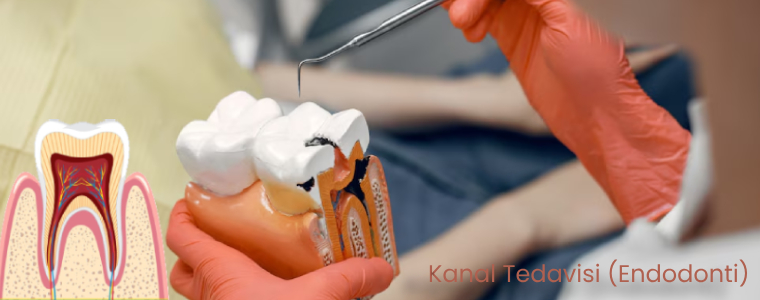
In root canal treatment (endodontics), your dentist cleans the infected or damaged pulp tissue (soft tissue containing nerves and blood vessels) inside the tooth. Then, the canals are shaped and filled with biocompatible special filling materials. This way, while preserving the function of your tooth, it also relieves your pain and prevents the spread of infection.
When Do You Need Root Canal Treatment?
Your dentist may recommend root canal treatment in the following situations:
- Advanced tooth decay: When decay progresses deep into your tooth and reaches the pulp, root canal treatment becomes necessary.
- Severe and persistent tooth pain: Especially pain that increases when chewing or with hot-cold foods indicates that your nerve tissue requires treatment. In this case, root canal treatment may be an appropriate method.
- Dental infections: If you have a gum abscess or inflammation at the root tip, root canal treatment eliminates this infection.
- Traumatic dental injuries: If your dental nerve is damaged due to impact, root canal treatment can save your tooth.
- Repeated dental procedures: Multiple filling procedures on the same tooth can damage your nerve tissue and may require root canal treatment.
- Deep cracks: Cracks in your tooth structure that extend to the pulp can allow bacteria to enter and therefore must be treated.
Remember that if you don't intervene in time, these problems can lead not only to tooth loss but also to jawbone infections and general health issues.
How is Root Canal Treatment Performed?

In modern dentistry, specialists prioritize comfort and effectiveness while performing root canal treatment through these steps:
- Detailed Examination and Diagnosis
- Your dentist first conducts a comprehensive oral examination.
- Then, using digital radiographic imaging techniques, they determine the exact location of the problem.
- Based on the test results, they prepare a personalized treatment plan for you.
- Local Anesthesia Application
- Isolation and Preparation
- Cleaning the Pulp and Shaping the Canals
- Your dentist carefully removes the infected pulp tissue using special endodontic tools.
- They precisely shape the root canals.
- They comprehensively disinfect the canals using antibacterial solutions.
- Filling the Canals
- Restoration
Benefits of Root Canal Treatment
Root canal treatment is one of the most valuable treatment methods in modern dentistry and offers you these advantages:- You preserve your natural tooth: Thanks to root canal treatment, you don't have to have your tooth extracted.
- You get rid of your pain: Your dentist completely eliminates the source of pain by cleaning the infected pulp tissue.
- You prevent the spread of infection: By cleaning bacteria and disinfecting the canals, you prevent the infection from spreading to other areas.
- You maintain your aesthetic appearance: Since you preserve your natural tooth structure, your smile doesn't change.
- You continue your chewing function: Your normal chewing power and comfort continue, so your nutrition is not adversely affected.
- You obtain a long-lasting solution: With proper care, you can use your root canal treated teeth for a lifetime.
- You protect your adjacent teeth: You prevent tooth shifts that may occur after tooth extraction, thus your tooth alignment remains intact.
How Long Does the Treatment Take?
Root canal treatment generally varies depending on your tooth structure and the complexity of your problem, but typically:
- Your dentist completes most cases in 1-2 sessions.
- Each session lasts approximately 45-90 minutes.
- While your front teeth can usually be treated in a single session, you may need to schedule 2 or rarely more sessions for your back teeth.
- In cases of acute infection, your dentist first applies a preliminary treatment to control the infection.
Post-Treatment Process and Care
To extend the life of your tooth after root canal treatment, you should pay attention to these points:
Short-Term Care
- You may feel mild sensitivity for 1-2 days after treatment, this is completely normal, and you can control this discomfort with pain relievers prescribed by your dentist.
- Complete the antibiotic treatment recommended by your dentist.
- Avoid consuming hard and sticky foods during the healing process.
- Avoid chewing with the tooth you had treated.
- Brush your teeth regularly twice a day and use dental floss.
- Have your regular dental check-ups every 6 months.
- If your dentist recommends, get a covering on your tooth for additional protection.
- Avoid consuming extremely hard foods, thus protecting your treated tooth.
Frequently Asked Questions About Root Canal Treatment
Is root canal treatment a painful procedure?
Absolutely not! Thanks to modern anesthesia techniques, you won't feel pain during the procedure. You may experience mild sensitivity after treatment, but this usually completely disappears within a few days.
How long does a root canal treated tooth last?
With proper care and regular check-ups, you can use your root canal treated teeth for a lifetime. In some cases, your dentist may recommend a crown to prevent the risk of tooth fracture.
Could tooth extraction be a better option than root canal treatment?
Absolutely not! You should preserve your natural teeth as much as possible. Treatments such as prosthetics or implants applied after tooth extraction not only cause you to spend more money but may also not offer as much comfort as your natural tooth.
Will my tooth discolor after root canal treatment?
The risk of discoloration is quite low thanks to dentists using modern treatment techniques. Mild discoloration may rarely be seen, but in such a case, your dentist can easily solve this problem with whitening or veneers.
Can I have root canal treatment during pregnancy?
Yes, you can have root canal treatment especially during the second trimester of pregnancy. In emergencies, you can also be treated during other periods of pregnancy, but you must inform your dentist that you are pregnant.
Conclusion
Root canal treatment (endodontics) is one of the most effective ways to save your tooth and protect your oral health. Thanks to the advanced techniques and equipment offered by modern dentistry, root canal treatment is now a treatment method that you can choose with peace of mind rather than fear. Consult a professional dentist for any questions about your oral and dental health and take the first step towards having a healthy smile. Remember that timely treatments both protect your health and reduce your need for more comprehensive treatments.
This blog post is for general information purposes and a professional dental examination is required for the diagnosis or treatment of individual dental problems.